Publications autour du thème de l'Agriculture en Permaculture
Autres sites web avec des publications intéressantes
Notre collection de publications et de travaux de recherche
124 Publikationen gefunden
Artikel
avril 2025
Lancet Planet Health 2025; 9: e314–25
Federal Institute of Technology (ETH Zürich), Technical University of Munich, INRAe, FiBL
Johanna Jacobi, Christian Andres, Farhah F Assaad, Stéphane Bellon, Xavier Coquil, Sebastian Doetterl, Dayana Naimid Esnarriaga, Diana Ortiz-Vallejo, Cyrille Rigolot, Johanna Rüegg, Sylvain Takerkart, Martin Trouillard, Boris Vilter, Janina Dierks
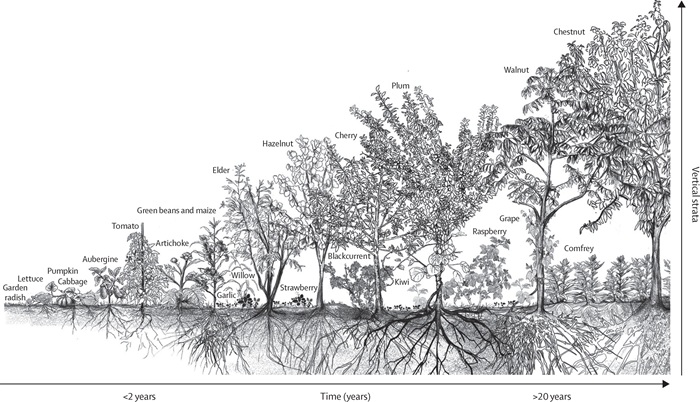
Inspired by the succession and vertical stratification found in nature, syntropic farming systems (SFS) incorporate annual and perennial plants in diversified farming systems. Numerous practice examples show the potential of SFS to enhance agroecosystems via optimised design and active management. Yet, scientific knowledge on SFS remains scarce, especially in the temperate zone. We compiled findings on the outcomes and enablers of SFS from 67 studies comprising diverse SFS designs—mainly from tropical countries—that have the potential to be implemented in temperate agricultural landscapes. Most studies highlight the high agrobiodiversity, nutritional diversity, and yield quality of SFS. Comparing the productivity of SFS with other farming systems shows mixed results. Carbon storage, soil fertility, water cycling, climate resilience, and plant health appear favourable in SFS across widely varying cropping systems and environments. SFS can also provide meaningful and dignified work. Nevertheless, remaining obstacles include high labour demand, intensive knowledge requirements, availability of tools and machines for SFS, and a lack of enabling policies. Efforts should focus on harnessing SFS to address the escalating socioecological crises in agri-food systems worldwide, including those of intensively managed cropland systems in the temperate zone where SFS systems could help to redesign agricultural landscapes.
Artikel
avril 2025
FiBL, Agroscope
Galland S., Dind A., Schmid N., Mesbahi G., Dubois S., Probo M., Mariotte P.
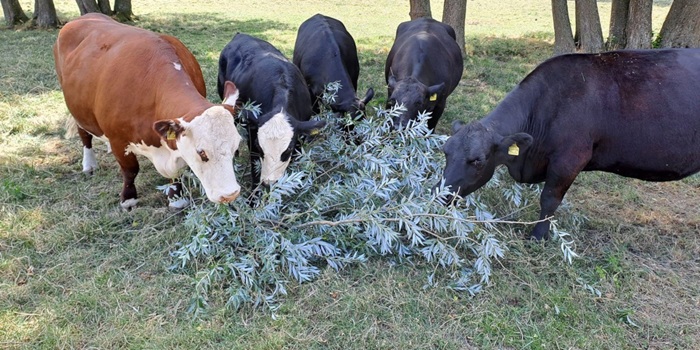
L’agroforesterie pour la production fourragère désigne l’usage des arbres en tant que ressource de fourrage pour le bétail. Les animaux consomment les feuilles et les jeunes rameaux soit directement sur l’arbre soit dans le cadre d’un affouragement à la rame. En Suisse, aucune donnée sur les rendements et les valeurs alimentaires des feuilles ou des rameaux n‘a été publiée jusqu’à présent et le but de cette étude était d’évaluer le potentiel fourrager d’espèces d’arbres fréquemment rencontrées sur les exploitations agricoles. Sept espèces d’arbres ont été évaluées sur six exploitations en Suisse romande. Tout d’abord, le lien entre le rendement et le diamètre de la branche a été mis en évidence pour les différentes espèces, ce qui permet de mieux planifier l’affouragement selon les besoins du bétail. Ensuite, une analyse approfondie de la qualité fourragère des feuilles et des rameaux a montré que les arbres avaient des valeurs alimentaires souvent bien meilleures que le fourrage à base d’herbe en été. Parmi les espèces étudiées, le saule blanc, le frêne commun et l’érable sycomore sont les espèces avec le plus fort rendement en feuilles par branche et des teneurs élevées en matière azotée. Les rameaux des arbres ont des valeurs nutritives plutôt médiocres mais peuvent fournir une source importante de minéraux. Dans l’ensemble, les résultats de notre étude sont prometteurs et mettent en évidence le rôle des arbres fourragers pour compléter et diversifier la ration des animaux d’élevage.
Artikel
avril 2025
Martin Schmid
Pflanzenkohle ist das Hausmittelchen für Mensch und Tier seit Jah r tausen den. Als natürlicher Bestandteil alle r fruchtbaren Humusböden weltweit hat sie ihre Dauer haftigkeit und Nutzen längst bewiesen und ist weltweit als potente Kohlenstoff Senke anerkannt. Nun soll in der Nutztier haltung die Steigerung der Stickstoff Effizienz gezeigt werden, d.h. auch weni ger Ammoniak und Lach gas Emissione n sowie Auswaschungen ins Grundw asser und eben auch weniger Düngerverlust und Gestank Dabei können auch Verbesserung beim Tierwohl beobachtet werden.
Artikel
mars 2025
FiBL
De Luca, Kevin und Müller, Adrian
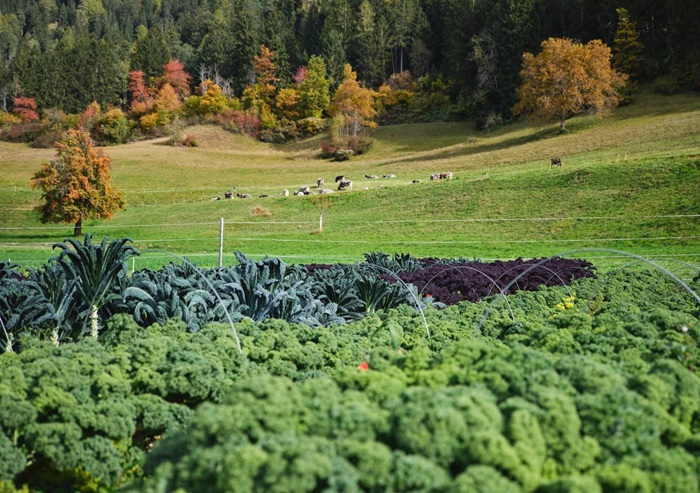
Agriculture and food systems are a central basis for our societies, providing food and a number of other services such as rural employment or landscapes with recreational value. However, global agriculture and food systems also have large environmental, social and economic impacts, contributing to biodiversity loss, climate change, water scarcity, precarious working conditions and unhealthy dietary patterns. The scale of these adverse impacts is significant. It is thus of paramount importance to support pathways towards agrifood system transformation, where these impacts are significantly reduced.
Artikel
février 2025
Vera Steiner, Sibyl Huber, Gianluca Giuliani, Christian Flury
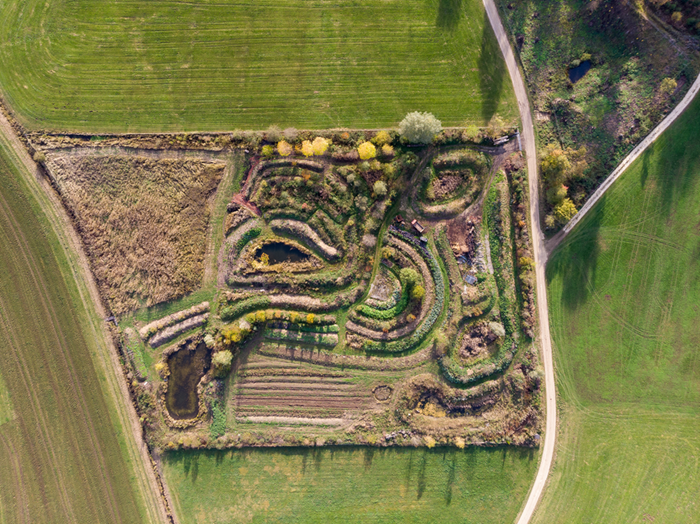
Das aktuelle Agrar- und Ernährungssystem ist weder ökologisch, sozial oder ökonomisch nachhaltig. Innovative Landwirtschaftsbetriebe zeigen, dass die bestehenden politischen und gesellschaftlichen Rahmenbedingungen oft einschränkend wirken und eine Transformation behindern. Der Klimawandel macht eine grundlegende Transformation nötig, was auch der Bundesrat in seiner Klimastrategie Landwirtschaft und Ernährung 2050 betont. Deshalb soll in der nächsten Agrarpolitik 2030+ ein ganzheitlicher Ernährungssystemansatz im Zentrum stehen und die Agrarpolitik auf die Ernährungssystempolitik ausgeweitet werden.
Die Stiftung Biovision greift diese Stossrichtung mit dem Programm «Agrarökologische Transformation Ernährungssystem Schweiz 2024–2027» auf. Ziel ist es, die Instrumente in der AP30+ stärker auf die agrarökologische Vielfalt auszurichten. Biovision zeigt anhand von erfolgreichen Praxisbeispielen, sogenannten Leuchtturmbetrieben, mögliche Visionen für ein zukunftsfähiges Ernährungssystem in der Schweiz auf. Mit der vorliegenden Studie sollen praxisnahe Hebel und Massnahmen identifiziert werden, um die Agrarpolitik 2030+ stärker auf die Agrarökologie – als das von Biovision formulierte Zielbild für die zukünftige Landwirtschaft – auszurichten. Die Anforderung an die identifizierten Hebel und Massnahmen ist, dass sie Initiativen und Betrieben, welche bereits jetzt agrarökologische Konzepte verfolgen, unterstützen, sowie den Einstieg für eine breite Masse an Betrieben erleichtern. Die Studie stützt sich dabei stark auf die Einschätzungen und Erfahrungen von Expert*innen aus der landwirtschaftlichen Praxis, wobei es sich um Betriebe handelt, die sich bereits für ein zukunftsfähiges Ernährungssystem interessieren und einsetzen, wie zum Beispiel die Leuchttürme von Biovision. Für die Begleitgruppe der AP30+ als primäre Zielgruppe sollen pragmatische Lösungen und Empfehlungen erarbeitet werden, die im Rahmen der überarbeiteten Agrarpolitik umsetzbar sind.
Agrarökologie baut auf einem Ernährungssystemansatz auf und beinhaltet die gesamte Wertschöpfungskette von der Produktion bis zum Konsum. Das Ziel von agrarökologischen Massnahmen ist ein nachhaltiges Management der natürlichen Ressourcen, wodurch vielfältige, resiliente und produktiven Ökosysteme geschaffen bzw. unterstützt werden. Neben den ökologischen Prozessen und Interaktionen sind auch soziale, ökonomische und politische Dimensionen wichtig. Die Transformation in ein agrarökologisches Agrar- und Ernährungssystem erfolgt in fünf Levels, wobei höhere Levels tiefgreifendere Veränderungen erfordern (nach Gliessman, 2016).
Artikel
février 2025
Peer Community Journal, Volume 5 (2025), article no. e17
Rheinland-Pfälzische Technische Universität Kaiserslautern-Landau
Julius Reiff, Hermann F. Jungkunst, Nicole Antes, Martin H. Entling
Permaculture is a promising framework to design and manage sustainable food production systems based on mimicking ecosystems. However, there is still a lack of scientific evidence especially on the crop productivity of permaculture systems. In this first study on permaculture yield, we collected yield data of eleven permaculture sites in Germany and surrounding countries, that also work according to organic guidelines. We used the Land Equivalent Ratio (LER) as an index to compare mixed cropping systems of permaculture sites with average monoculture yield data of the overall German agricultural sector, as well as that of only organic German agriculture. An LER of 1 indicates equal yields of the compared polyculture and monoculture, while an LER of 1.2 would indicate a 20% higher productivity of the polyculture. Mean permaculture LER as compared to total German agriculture was 0.80 ± 0.27 and 1.44 ± 0.52 as compared to German organic agriculture, both with no significant difference to 1. Our results imply, that yields of permaculture sites are comparable to predominant industrial agriculture. The observed productivity may result from the application of key permaculture principles, such as utilizing diversity and mutually supportive species and improving soil health, which contribute to system stability and resource efficiency. Provided that future studies will support our findings, permaculture could combine soil, biodiversity and climate protection with agricultural productivity. Most importantly, the variables that determine the difference in crop productivity among permaculture sites need to be identified and evaluated.
Artikel
janvier 2025
FiBL
Elisabeth Klingbacher, Theresia Markut, Peter Meindl, Susanne Baumgartner
Unter dem Begriff Agroforstwirtschaft werden Landnutzungssysteme zusammengefasst, bei denen Bäume (manchmal gemeinsam mit Sträuchern) mit Ackerkulturen und/oder Tierhaltung auf einer Fläche kombiniert werden. Im Gegensatz zu Hecken oder Windschutzanlagen werden im Agroforst auch die Bäume genutzt.
In Europa ist dieses System aufgrund der zunehmenden Intensivierung der Landwirtschaft beinahe in Vergessenheit geraten, doch in den letzten Jahren erfährt die moderne Agroforstwirtschaft auch in Österreich einen neuen Aufschwung.
Agroforstsysteme beweisen, dass sich altbewährte Methoden auch in der modernen Landwirtschaft sehr erfolgreich umsetzen lassen. Die Flächen auf denen Bäume mit Ackerkulturen kombiniert werden, sind derzeit zwar immer noch gering, doch das Interesse der Landwirt*innen, Agroforst auf ihren Nutzflächen umzusetzen, wächst stetig (Abbildung 1). Die ab 2025 beantragbare Maßnahme „Agroforststreifen“ im ÖPUL-Programm wird den Trend weiter vorantreiben. Diese Entwicklung ist nicht nur aus ökologischer Sicht erfreulich, auch die Betriebe profitieren in vielerlei Hinsicht.
Artikel
octobre 2024
Coventry University, University of Gastronomic Sciences,
Vincent Dauby, Rosemary Venn, Julia Wright, Ulrich Schmutz, Paola Migliorini
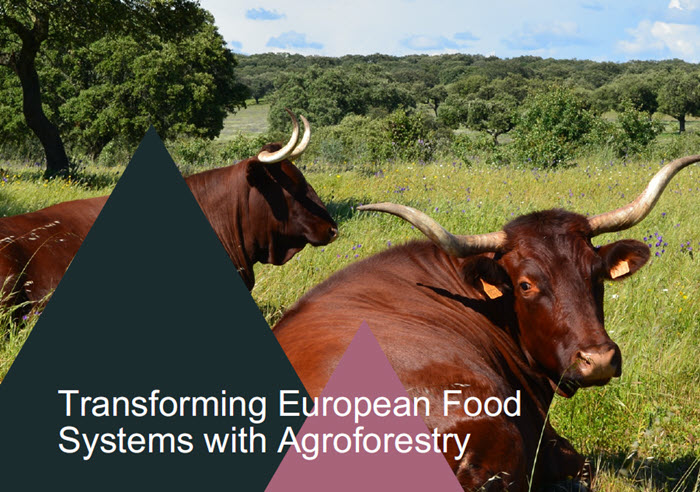
The European Union is at a critical juncture in its pursuit of sustainable development and climate resilience. As global challenges such as climate change, biodiversity loss, water management and food insecurity intensify, innovative and holistic approaches to food and farming are essential. There is growing recognition of the need for a significant transformation in the agricultural sector to enhance its sustainability, resilience, and responsiveness to societal and policy demands. This is highlighted in numerous policy documents and initiatives as expressed in the Dialogue of the Future of EU Agriculture (EU Commission, 2024). Agroforestry, a set of agroecological4 management practices that integrates trees and shrubs with agricultural land, emerges as a transformative solution that aligns with the EU’s strategic goals for a resilient and sustainable food system.
Artikel
septembre 2024
FiBL
Araldi, Flore; Sonnard, Robin; Hévia, Rebecca; Guggisberg, Cecilia und Bougouin, Hélène
Le BioDiVerger est né en 2013 sur le site de Marcelin à Morges (VD). Installé sur une parcelle de 5300 m2, il est composé d’une partie en agroforesterie maraîchère et d’une partie inspirée de la permaculture. Durant les 10 ans du projet, diverses études ont été menées au niveau de l’état phytosanitaire des arbres, des qualités des sols, de la biodiversité et du suivi technico-économique. Ces modèles représentent une approche novatrice visant à concilier production agricole, biodiversité et durabilité.
Artikel
juillet 2024
International Journal of Agriculture and Nutrition 2024; 6(2): 89-94
Swami Vivekananda University
Aritra Deb and Sayani Bhowmick
Zero Budget Natural Farming (ZBNF) is an innovative and sustainable agricultural method that emphasizes the elimination of chemical inputs and reliance on natural processes. Developed by Indian agriculturalist Subhash Palekar, ZBNF is designed to minimize production costs and improve soil health through the use of locally sourced materials. The core principles of ZBNF include the use of bio-inoculants such as Jeevamrutha and Beejamrutha, which are fermented microbial cultures that enhance soil fertility and protect seeds. Mulching and the Waaphasa technique, which ensures adequate soil aeration, further support plant growth and resilience. By promoting biodiversity and natural resource conservation, ZBNF addresses critical environmental issues, such as soil degradation and water scarcity. This farming approach also fosters economic stability for farmers by reducing dependency on costly chemical fertilizers and pesticides, leading to improved crop yields and profitability. ZBNF’s holistic framework aligns with global sustainable development goals by encouraging eco-friendly agricultural practices that support food security and rural livelihoods. As the agricultural sector faces increasing challenges from climate change and resource depletion, ZBNF offers a viable pathway toward sustainable farming, reinforcing the need for widespread adoption and policy support to enhance its scalability and impact.
Artikel
juillet 2024
Communications Earth & Environment 5, 305 (2024)
Julius Reiff, Hermann F. Jungkunst, Ken M. Mauser et al.
Permaculture is proposed as a tool to design and manage agroecological systems in response to the pressing environmental challenges of soil degradation, climate change and biodiversity loss. However, scientific evidence on the effects of permaculture is still scarce. In this comprehensive study on a wide range of soil and biodiversity indicators, we examined nine farms utilizing permaculture and paired control fields with locally predominant agriculture in Central Europe. We found 27% higher soil carbon stocks on permaculture sites than on control fields, while soil bulk density was 20% lower and earthworm abundance was 201% higher. Moreover, concentrations of various soil macro- and micronutrients were higher on permaculture sites indicating better conditions for crop production. Species richness of vascular plants, earthworms and birds was 457%, 77% and 197% higher on permaculture sites, respectively. Our results suggest permaculture as effective tool for the redesign of farming systems towards environmental sustainability.
Masterarbeit
juin 2024
Université Catholique de Louvain-la-Neuve
Peyron, Léa
À l’ère du digital, nos rythmes de vies ne font que s’accélérer, notre consommation se base sur du facile et du rapide, nous éloignant de l’essentiel et de notre rapport à la terre. Au niveau du territoire, cela se traduit par une expansion des villes et une désertification des campagnes, entraînant l’arrêt des activités économiques locales. Comment le changement de notre régime alimentaire et le remplacement de l’agriculture intensive par la permaculture et l’agriculture biologique pourraient-ils redonner du dynamisme aux campagnes ? L’objectif est ici de ramener un nouvel élan de vie, par le biais de l’agriculture, à des villages actuellement désignés comme « villages-dortoirs ». Nous utiliserons Omezée, petit village du namurois, et son château-ferme actuellement en ruine, pour imaginer l’impact qu’apporterait ce changement de méthodes agricoles, plus respectueuses de l’environnement. Cette étude sera faite à différentes échelles : de la mise en place d’un nouveau système agricole sur le territoire, répondant à nos besoins alimentaires, jusqu’au dimensionnement d’une unité de transformation locale, au sein du village.