Publikationen rund um das Thema Permakultur-Landwirtschaft
Weitere Webseiten mit interessanten Publikationen
Unsere Sammlung an Publikationen und Forschungsarbeiten
124 Publikationen gefunden
Artikel
April 2026
Agroforest Syst 100, 112 (2026)
Matthew M. Smith, Kristin Floress, Todd Kellerman, Gary Bentrup, Katherine MacFarland, Mark Batcheler & Lord Ameyaw
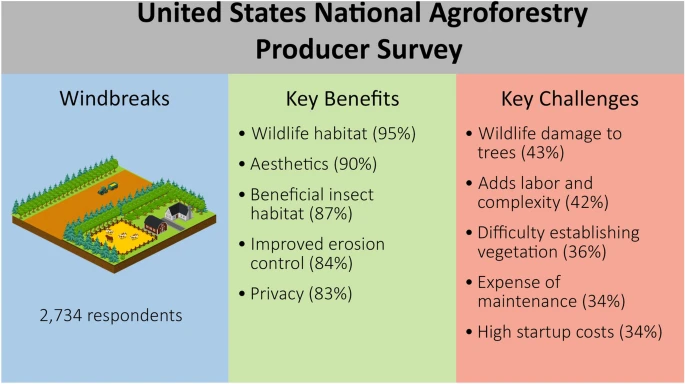
Windbreaks are an agroforestry practice that have been used extensively in the United States for centuries. Researchers have investigated why producers use windbreaks through regional surveys; however, no national analysis has been conducted on windbreak extent or adoption, limiting understanding of key information needed to guide technical assistance and research. To address this knowledge gap, the National Agroforestry Producer Survey was conducted. The survey was completed by 5682 producers with agroforestry (52% response rate). This study provides results from the 2734 producers who reported using windbreaks, one of the five agroforestry practices covered in the survey. Windbreak use spanned all farm size classes and regions. Windbreak acreage per farm averaged 10.2 acres (4.1 hectares) equivalent to roughly 3.8% of land area per farm with the practice. Producers reported using farmstead (60%), livestock (48%), boundary (47%), and field windbreaks (43%), along with hedgerows (40%) and living snow fences (13%). Key benefits for each windbreak type differed and corresponded to the primary function for which that windbreak type was designed. Across windbreak types, the most frequently cited challenge was wildlife damage to trees. Over 85% of producers also reported harvesting crops and products from their windbreaks, with 33% selling crops and products from windbreak vegetation, and 79% using crops and products for personal or on-farm use. Most operations established windbreaks at least 15 years prior to the survey, and 87% of producers reported a desire to maintain or expand the acres they have in windbreaks.
Artikel
April 2026
Agriculture, Ecosystems & Environment, Volume 405, 2026
MTA–HUN-REN Centre for Ecological Research, Anhalt University of Applied Sciences
Péter Batáry, Christina Fischer
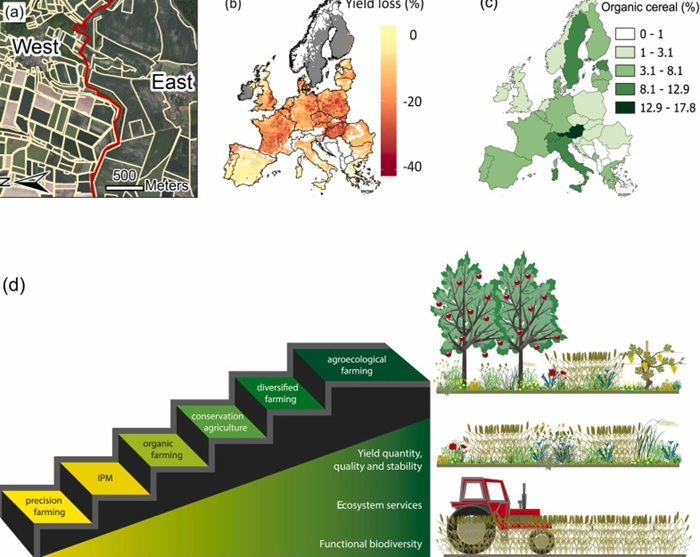
Agricultural intensification at local and landscape scales has led to significant biodiversity loss, adversely affecting ecosystem services. Agricultural areas of Central and Eastern Europe (CEE) are particularly vulnerable, as their large, homogeneous croplands, which emerged during collectivisation, are highly susceptible to climate change impacts, especially droughts. This opinion paper underscores that land-use and climate change drive necessary agroecological transformations particularly in CEE countries. Evaluating and integrating transformation pathways are crucial for a comprehensive landscape-scale redesign that can buffer the impacts of current and future climate change. We emphasise the importance of shifting towards climate-smart agroecology and transforming large-scale agriculture landscapes in CEE countries. Such transformation is vital to maintain stable production as well as farmland biodiversity and ecosystem functioning. The process requires rapid, innovative, multidisciplinary, and multi-stakeholder approaches that integrate insights from ecology, economics, social and climate science. We discuss policy directions and practical recommendations to support this transition, including promoting sustainable farming practices through increased subsidies beyond current standalone agri-environment schemes. Additionally, fostering farmer collaboration for resource management and advancing climate-resilient technology research are essential. Education programs must highlight biodiversity-friendly practices’ benefits, while collaboration among policymakers, scientists, and farmers can help tailor innovative solutions to regional needs. Our approach aims to guide sustainable agricultural development, ensuring CEE countries can adapt effectively to environmental challenges.
Masterarbeit
April 2026
Wageningen University
Aliénor Dirckx
Climate change is leading to shifts in the suitability of regions for winegrowing globally (Moriondo et al., 2013). Changes in temperature and precipitation trends are influencing grapevine phenology, leading to yield loss and altered wine taste (Van Leeuwen et al., 2024). Therefore, winegrowers must opt for climate-resilient viticultural practices to preserve their production over time.
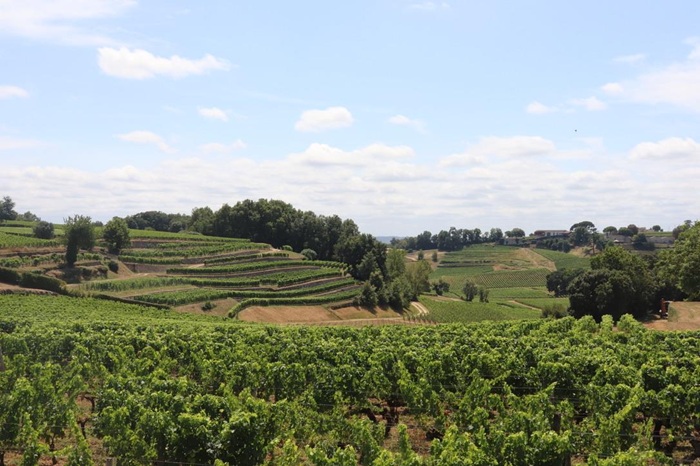
Agroforestry is a nature-based solution that can provide ecosystem services essential for mitigating the impacts of climate change on agriculture. Recent studies have shown that agroforestry in vineyards, also termed vitiforestry, can protect grapevine production under extreme heat and drought (Bourgade et al., 2020; Grimaldi, 2018). However, the extent to which winegrowers experience such benefits has not yet been researched.
Hence, this study aims to assess the capacity of agroforestry in mitigating the socio-environmental effects of climate change on vineyards by identifying the potential impacts of vitiforestry on a winegrower’s livelihood compared to monocultural vineyards. It focuses on the South West of France, a globally recognised winegrowing region that is at severe risk of losing land suitability for winegrowing under climate change (Moriondo et al., 2013).
Insights from surveys and interviews with winegrowers, as well as from the literature, suggested that vitiforestry could enhance vineyard resilience in the context of climate change. Vitiforestry was found to provide a range of ecosystem services that monoculture systems do not, such as natural pest control, water management and microclimate regulation. However, there are economic and social barriers that must be overcome to facilitate its widespread adoption. Results showed that vitiforestry is more expensive than monoculture due to the high implementation costs. Nonetheless, vitiforestry winegrowers could sell their trees’ products and apply for subsidies to increase their short-term revenues. Finally, survey responses showed that winegrowers perceive climate change as a serious threat to their grape production. Most respondents were aware of vitiforestry and expressed interest in adopting it if sufficient evidence of its benefits for a vineyard’s ecological resilience is provided.
Therefore, to support the adoption of vitiforestry at a larger scale, more financial and social incentives must be initiated. This can be achieved by creating spaces for knowledge-sharing, developing more efficient government subsidies and boosting demand for vitiforestry wines on the market.
Artikel
März 2026
Weed Research, 2026
Diego Barranco-Elena, Jordi Recasens, Jordi Llorens-Calveras, Alexandre Escolà, Bàrbara Baraibar
Weeds are a major constraint in Mediterranean organic vineyards, where tillage is the dominant under-vine management practice but entails high labour costs and negative environmental impacts. This study evaluated the effectiveness of four organic mulches derived from local agro-industrial by-products (almond shells, almond peels, walnut shells and wine pomace) compared with conventional tillage over two growing seasons in irrigated vineyards (Vitis vinifera L.) in NE Spain. Weed cover was monitored monthly and analysed at the community level, together with soil properties, mulch persistence and vine canopy structure, which was assessed using LiDAR. Lignified mulches (almond and walnut shells and almond peels) consistently suppressed annual weeds (< 5% cover) across both years, whereas tilled plots exhibited recurrent flushes and wine pomace allowed higher weed emergence. In contrast, perennial weeds, particularly Cynodon dactylon (L.) Pers., progressively dominated all mulched plots, eroding treatment differences by the end of the trial. The indicator species analysis confirmed distinct associations: disturbance-adapted annuals (e.g., Chenopodium album L., Sonchus asper L. Hill) with tillage, and aggressive perennials (C. dactylon, Convolvulus arvensis L.) with mulches. Mulch decomposition rate influenced performance: persistent shells provided long-term suppression, while fast-decomposing wine pomace mulch enhanced canopy vigour but lost effectiveness against weeds sooner. Soil chemistry at 0–15 cm was only marginally affected. Overall, organic mulches offer a sustainable alternative to tillage for annual weeds and can improve vine growth but must be integrated with complementary strategies to limit perennials.
Artikel
März 2026
Agroforestry Systems Volume 100, article number 106, (2026)
Sonia Pereira-Crespo, Pilar Gago, Adrián Botana, Marcos Veiga, Juan Castro, Laura González, María del Pilar Martínez-Diz, César Resch, Dalia A. Plata-Reyes, Roberto Lorenzana & Gonzalo Flores-Calvete
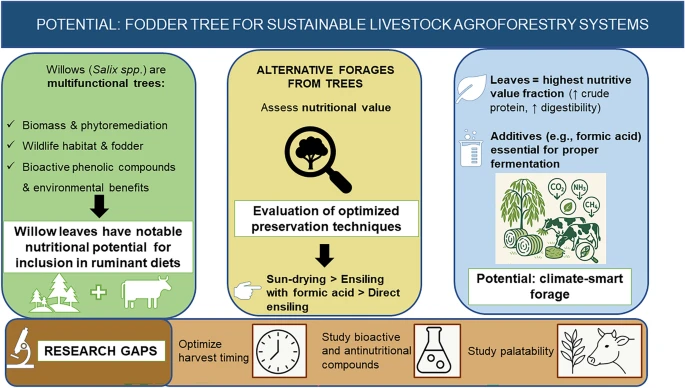
This study evaluated the nutritional value and different methods of conservation of two willow materials—the hybrid clone Terra Nova (HTN) from a short‑rotation coppice (SRC) system and the native Salix atrocinerea (SAT) from riparian stand—representing contrasting willow resources available in the study region. The leaf fraction (LE)—although representing 5.0 in untreated silages). Willow leaf silages achieved CP levels of 18–22% DM (up to 27.8% in HTN with additive), while fermentation intensity remained low; SAT leaves showed a higher fermentability coefficient (44 vs. 28), consistent with better acidification. The HTN material proved suitable as a protein supplement for moderate‑energy diets, whereas SAT was limited to maintenance‑level feeding. Willow forage shows notable potential as a supplemental fodder resource for ruminant systems, although effective preservation requires additive use to maintain nutritional quality during storage.
Artikel
März 2026
Energy Reports Volume 15, June 2026, 109187
Landscape Research Institute, Czech Republic
L. Janota, J. Weger, J. Knápek, K. Vávrová
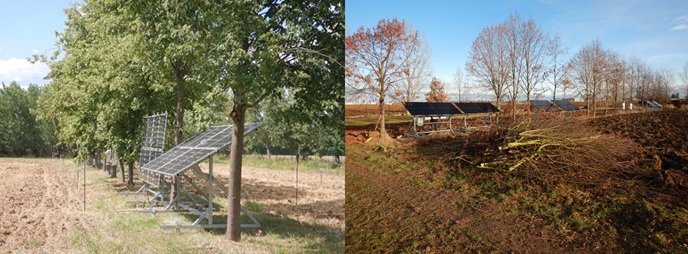
Successful energy transition and climate action require accurately dimensioned local renewable energy systems. This study develops a deterministic techno-economic model and an incremental optimisation methodology to evaluate photovoltaic, agrivoltaic and battery storage technologies within energy communities. A 100-member community is simulated using hourly load profiles and both PVGIS-based and real agrivoltaic–agroforestry generation data. Under the NPV=MAX criterion, battery storage is not economically viable and photovoltaic installations reach 17–26% energy self-sufficiency. Under the NPV= 0 criterion, optimal agrivoltaic capacity increases by 60–100%, battery storage becomes deployable, and self-sufficiency rises to 27–45%. Avoided GHG emissions increase from 73.6 tCO₂/year under the NPV-maximisation objective to 122.7 tCO₂/year under the NPV = 0 (break-even) configuration in the simulated 100-member community, clearly demonstrating the environmental benefit of self-sufficiency-oriented sizing. The strong divergence between both optimisation objectives demonstrates that investment intent fundamentally shapes the technical, economic and environmental outcomes of community energy systems. These findings underscore the need for robust pre-project sizing tools to design effective, resilient and low-carbon local energy solutions.
Poster
März 2026
University of Bristol
Fotis Sgouridis, Rose Williamson, Michaela Reay, and Christopher Williamson
Degrading topsoil, declining habitat and biodiversity, climate change and social and political unrest alongside a growing population and demand for food are calling for a sustainable alternative to the current industrialised agricultural systems. Permaculture and agroecology are two potential alternative sustainable food systems that are currently lacking scientific evidence base. This study compared the two alternative management approaches against a conventionally practiced control in terms of their soil fertility, microbial abundance and diversity (via PLFA analysis) and greenhouse gas mitigation potential. The permaculture site comprised of a no-dig, organically amended market garden for vegetable production, while the agroecology site was minimally tilled and organically amended, whereas the control was tilled & fertilised with a legacy of herbicide and pesticide use. Monthly soil sampling and greenhouse gas emission monitoring via closed chambers over a 12-month period assessed the soils biogeochemistry, microbial abundance and greenhouse gas fluxes. Permaculture soils supported the most abundant microbial community, with an annual mean total microbial biomass of 89.92 ± 20.84 µg g-1 (23.23 ± 30.7 µg g-1 and 28.69 ± 30.7 µg g-1, more than the minimally tilled and conventionally managed soil, respectively). The same soils also exhibited more than double soil organic matter content (annual mean 16.87%) relative to the conventional management, alongside a significantly lower proportion of soil organic carbon (SOC) loss as CO2 (1.98%, compared to 7% under conventional management). Surprisingly, nitrous oxide (N2O) fluxes at the conventional site were limited, despite the build-up of the soil nitrate pool during summer, which was attributed to the exceptionally dry soil conditions that prevailed during the year of study, suppressing microbial N2O production. However, the denitrification product ratio (N2O/N2+N2O) was consistently lower under permaculture soils compared with agroecology and conventional soils, an indication of a strong potential for N2O emission mitigation. Seasonal warming during spring further stimulated microbial activity, accelerating nutrient acquisition and carbon turnover, with permaculture no-dig soils maintaining three times greater total soil carbon (0.67 ± 0.02 %, annual mean), suggesting a more stable carbon pool. Overall, this study demonstrates permaculture and agroecology practices, particularly no dig management combined with organic amendments, enhances soil fertility, microbial activity, and carbon retention, indicative of a more balanced food system. Multi-year assessments across contrasting climatic conditions are warranted to reduce the uncertainty of temporal variability in GHG flux dynamics and assess long-term carbon stability under these managements.
Buchkapitel
März 2026
Prathamesh Jadhav, Shryesh Thube, Sakshi Bansode, Janhavi Barbind, Ajay Gawali, Sachin Chaudhari
This study investigates an AI based model to predict crop yields based on soil health monitoring and increasing agricultural productivity through farming. Soil health (determined by factors such as nutrient levels, pH, and organic matter) plays a significant role in crop growth. However, traditional yield prediction methods are often inaccurate and do not account for the interactions between soil, environment, and crop characteristics. This study used machine learning models to analyze soil and environmental data to capture key variables that affect crop performance. The model integrates information from soil samples, weather patterns, and crop history to provide farmers with information to guide crop management decisions. The findings show that AI-based predictions outperform traditional models, given that the data can be tailored to agriculture. This research has important implications for permaculture, allowing farmers to increase yields and reduce input costs while promoting more environmentally friendly agriculture.
Artikel
März 2026
Christophe Gaudry, Estelle Petit, Eric Tannier, Marie-Thérèse Charreyre
Les dérèglements climatiques, l’effondrement de la biodiversité sauvage et cultivée, font peser des risques sur la sécurité alimentaire des populations, et ceci même dans les pays où cette question ne se posait plus. En région stéphanoise, Christophe Gaudry, paysan bio, a entrepris, à son échelle, de renverser cette tendance en diversifiant les variétés cultivées, fruits ou légumes. Il travaille selon des techniques de permaculture et de maraîchage sur sols vivants. Sa ferme ambitionne de devenir une Arche de Noé végétale, où légumes, arbustes à petits fruits et arbres fruitiers se côtoient et participent à une vaste synergie qui bénéficie à l’ensemble des cultures. Parmi les nombreuses espèces cultivées, les courges intéressent particulièrement Christophe Gaudry qui en a cultivé jusqu’à 54 variétés différentes ! Cette étonnante diversité a attiré l’attention de Marie-Thérèse Charreyre, chercheuse au CNRS, rejointe par Éric Tannier, chercheur à l’Inria, qui souhaitent contribuer à la redirection écologique par de la recherche participative. Ainsi est né un projet original associant chercheurs et acteurs de terrain autour de cucurbitacées variées, depuis leur culture jusqu’à leur mise en valeur au travers de créations culinaires réalisées par le pôle Innovation du Centre de Recherche de l’Institut Lyfe, dirigé par Estelle Petit. Ce livre retrace leur aventure commune, en explorant des volets complémentaires de ce projet de recherche : agronomique (de la graine à la récolte des courges), sensoriel (avec la découverte du mode de consommation crue de certaines courges), nutritionnel (avec des analyses sur les sucres, les fibres, les micro-nutriments) et, bien sûr, culinaire (avec des recettes « de tous les jours » et des recettes « gastronomiques »). A l’évidence, la courge est un légume d’avenir !
Artikel
März 2026
University of Sassari
Maria Giovanna Cassa
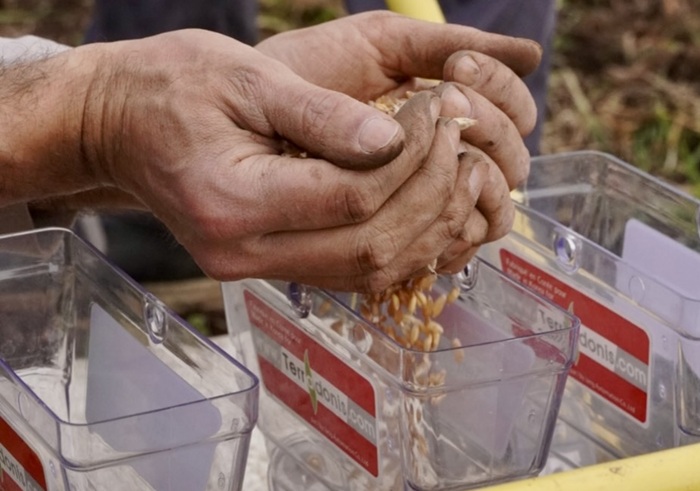
The article reflects on how permaculture offers a framework for signifying sustainability on a daily basis, focusing on practices and projects carried out by permaculturists in Sardinia. Three ethics of permaculture—earth care, people care, and fair share—emerge as pivotal in driving actions and choices. Projects are modelled on an ecological resilience-oriented model mimicking nature, which allows for structuring the world based on relationships that can address growing environmental concerns. Through ethnographic examples of wheat production and customs among visiting friends, the article illustrates how nature serves as a model for people, merging with local agro-pastoral traditions and claims to island identity. In Sardinia, permaculturists’ ethical orientation towards every living and non-living element of the system combines with local cultural customs, in a shift from agricoltura to agricultura. This alternative ontology based on relatedness blurs the boundaries between human and non-human and between past, present, and future. Caring for humans thus becomes caring for soils, microbes, vegetation, winds, and rain; caring for future generations means fairly sharing the world between humans and non-humans in the present.
Konferenz Artikel
Februar 2026
FiBL France
S. Le Guennic, M. Chomel and M. Trouillard
Agroforestry (AF) applied to fruit trees is promising for helping to cope with major global challenges, such as climate change and biodiversity loss. However, knowledge about such systems takes a very long time to acquire, and mature AF orchards in temperate regions are very scarce.
To circumvent this issue, a mesocosm experiment was created in which a pear tree is accompanied by four different perennial herbaceous plants at varying modalities of density and management. One of the tested hypotheses comes from ’syntropic‘ agriculture, which suggests that intensive use of companion plants at very high density with frequent pruning can be beneficial for plant development and soil health.
Our results overall show that in our (constrained) system, the growth of pear trees is not favored by the presence of companion plants, but that the competition for resources that they trigger can be entirely offset by frequent management (pruning + mulching with the chopped material). Furthermore, mineral nutrition and certain soil functions related to nutrient cycling seem to be enhanced by the presence of companion plants, even though nitrogen appears as a major potential bottleneck.
Artikel
Februar 2026
Inrae
Diana Carolina Ortiz-Vallejo, Vincent Cellier, Violaine Deytieux, Alain Berthier, Antoine Savoie, et al.
Pesticides are widely used in agriculture to protect crops from animal pests, diseases, and weeds, helping to maintain yields under diverse production conditions. However, their widespread and repeated use has led to environmental contamination, biodiversity loss, and growing concerns about human health. While Integrated Pest Management (IPM) and organic farming have sought to reduce pesticide dependency, both approaches still permit pesticide use, and their adoption remains limited due to technical and economic constraints. In this context, we explore the feasibility of a third way: pesticide-free agriculture based on agroecological crop protection (ACP) principles. Drawing from the Rés0Pest experimental network launched in France in 2012, we present ten years of results from nine sites covering a range of pedo-climatic conditions and socio-economic contexts. Rés0Pest implemented cropping systems that excluded all pesticide use, including seed treatments, while maintaining synthetic fertilizer inputs. The systems were co-designed through participatory methods, following a system experiment approach that evaluates the effects of a combination of cropping practices and their interactions on cropping system performance over the long term. Results showed that in pesticide-free systems, it is possible to achieve yields comparable to conventional and higher than organic systems and, in some cases, generate higher net farm income. Pest and pathogen crop damage did not significantly increase over time, although weed management remained a key challenge. These findings suggest that technically and economically viable pesticide-free arable systems are possible under certain conditions, and that new solutions are needed to support their adoption across a wider range of contexts. We discuss implications for research, farming, and policy, and emphasize the need for adaptive experimentation and systemic performance assessment to support agroecological transitions.