Syntropic farming systems for reconciling productivity, ecosystem functions, and restoration
Artikel
Publikation
Johanna Jacobi, Christian Andres, Farhah F Assaad, Stéphane Bellon, Xavier Coquil, Sebastian Doetterl, Dayana Naimid Esnarriaga, Diana Ortiz-Vallejo, Cyrille Rigolot, Johanna Rüegg, Sylvain Takerkart, Martin Trouillard, Boris Vilter, Janina Dierks
Zusammenfassung
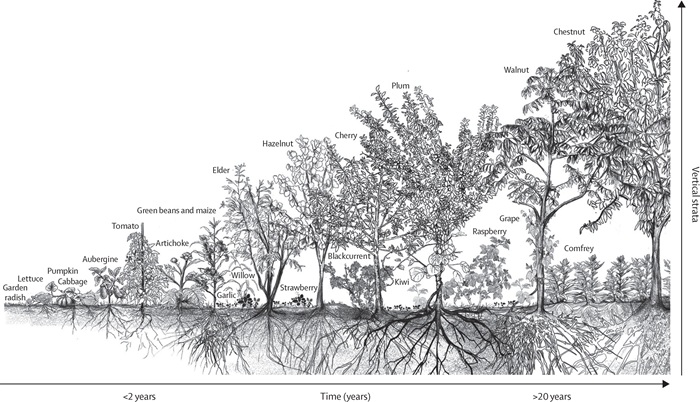
Inspired by the succession and vertical stratification found in nature, syntropic farming systems (SFS) incorporate annual and perennial plants in diversified farming systems. Numerous practice examples show the potential of SFS to enhance agroecosystems via optimised design and active management. Yet, scientific knowledge on SFS remains scarce, especially in the temperate zone. We compiled findings on the outcomes and enablers of SFS from 67 studies comprising diverse SFS designs—mainly from tropical countries—that have the potential to be implemented in temperate agricultural landscapes. Most studies highlight the high agrobiodiversity, nutritional diversity, and yield quality of SFS. Comparing the productivity of SFS with other farming systems shows mixed results. Carbon storage, soil fertility, water cycling, climate resilience, and plant health appear favourable in SFS across widely varying cropping systems and environments. SFS can also provide meaningful and dignified work. Nevertheless, remaining obstacles include high labour demand, intensive knowledge requirements, availability of tools and machines for SFS, and a lack of enabling policies. Efforts should focus on harnessing SFS to address the escalating socioecological crises in agri-food systems worldwide, including those of intensively managed cropland systems in the temperate zone where SFS systems could help to redesign agricultural landscapes.
Teile diesen Beitrag